
Why We Pick Grapes at Night: Bringing In the 2026 Harvest
We picked most of the 2026 vintage in the dark. Not for the romance of it — headlamps and a 3:00 AM alarm wear thin quickly — but because the temperature of the fruit when it reaches the crush pad shapes the finished wine more than almost anything we do afterwards. Here is how the season closed out, and why the last bin came off at sunrise on 5 September instead of a week earlier.
The Short Version
- Nearly every red in the 2026 vintage was picked between midnight and first light
- Cold fruit holds its acidity and its aromatics, and gives us control over when fermentation starts
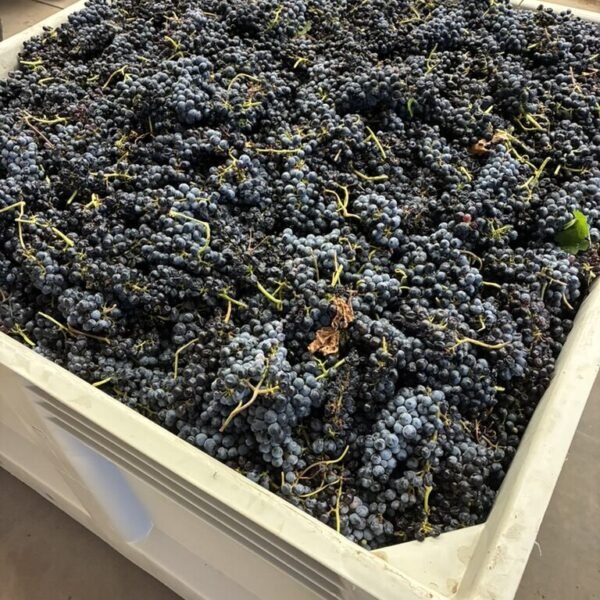
- Petite Sirah and Grenache came in on 20 August
- Cabernet Sauvignon and Mourvèdre both needed an extra week to ripen, and closed the season on 5 September
- The Mourvèdre is co-fermented with the Cabernet rather than blended in later
Jump to a section
Why We Pick in the Dark
The high desert gives us a temperature swing most wine regions would envy. The difference between an August afternoon at 4,200 feet and the hour before dawn in the same rows can run thirty degrees or more. That swing is why Willcox fruit keeps its acidity through a hot summer — and it is also why our crew works nights.
Grapes picked cold arrive cold, and cold fruit behaves better in three specific ways:
- Acidity survives the trip. Warm fruit begins breaking down the moment it leaves the vine. Cold fruit does not, so the brightness we spent the whole season protecting is still there at the crush pad.
- Aromatics stay put. The compounds that give a wine its nose are volatile, and heat drives them off. What evaporates in a warm bin never reaches your glass.
- We decide when fermentation starts. Warm fruit can begin fermenting on its own before it reaches the tank. Cold fruit waits for us, which is what makes a proper cold soak possible.
There is a fourth reason that never makes the brochure. Late-summer monsoon storms build through the afternoon here, so picking at night is not only better for the fruit — it gets the fruit in before the sky opens. When our Syrah and Viognier came off at 3:00 AM under heavy cloud with rain on the horizon, there was no time for photographs. On 20 August, bringing in the Petite Sirah and Grenache, we managed a few seconds.
The Week We Waited
Our Cabernet Sauvignon and Mourvèdre were down for 29 August. Neither block was ready.
Ripeness is not one thing that arrives on one day. Sugar climbs on its own schedule; colour, tannin and flavour follow on another. Pick when the numbers say go but before the fruit tastes finished and you get a wine that is technically correct and hollow in the middle — and no amount of cellar work puts back what was never picked in the first place.
So we waited, which is the harder call. Every extra day on the vine is another day of weather we do not control, in a season that had already handed us a warm winter, an early bud break and a monsoon. A week more hang time meant a week more risk on two of our biggest reds.
The vineyard sets the schedule. We just read it.
Wheels Down at Sunrise

The last bin of the 2026 vintage came off at first light on Saturday, 5 September. A season that started two weeks early finished a week late, which is about as close to plan as harvest ever gets.
The Mourvèdre goes into the tank with the Cabernet rather than being blended in as a finished wine later. It is the same co-fermentation thinking behind Sky High Syrah — Dark Sky, applied to a different pair of grapes: ferment them together and the two integrate at a level blending cannot reach afterwards.
What Happens Now
From the bins the fruit goes straight to the winery. It is destemmed, then held in a cold soak that draws colour and flavour out of the skins before fermentation begins. From there it ferments, and then it settles into French oak.
Then it waits. Reds of this weight are not in a hurry, and it will be a while before the 2026 vintage lands in anyone’s glass. All the decisions that mattered most were made in the vineyard, in the dark, before any of it reached a barrel.
In the meantime, earlier vintages are open and pouring in our Willcox tasting room, Thursday through Saturday. Come taste where the last harvest landed.
Let’s fly, wine lovers.